For years, home internet performance was limited more by wireless technology than by broadband speed. As internet providers continue delivering multi-gigabit connections, traditional Wi-Fi standards are struggling to keep up. Wi-Fi 7 aims to solve this problem by delivering dramatically higher speeds, lower latency, and improved performance in crowded environments.
Although many consumers still use Wi-Fi 5 or Wi-Fi 6 routers, manufacturers are rapidly expanding their Wi-Fi 7 product portfolios. The transition is happening faster than previous wireless upgrades because modern households now rely on dozens of connected devices simultaneously.
What Makes Wi-Fi 7 Different?
Wi-Fi 7 introduces wider 320 MHz channels, Multi-Link Operation, and higher-order modulation technologies. Together, these improvements allow devices to communicate more efficiently while reducing congestion and latency.
The result is smoother cloud gaming, faster file transfers, more reliable video conferencing, and improved support for emerging technologies such as augmented reality and AI-powered applications.
Leading Wi-Fi 7 Routers in 2026
- Standard: Wi-Fi 7
- Bands: Quad-Band
- Networking: Multi-Gig Ethernet
- Best For: Gaming and Large Homes
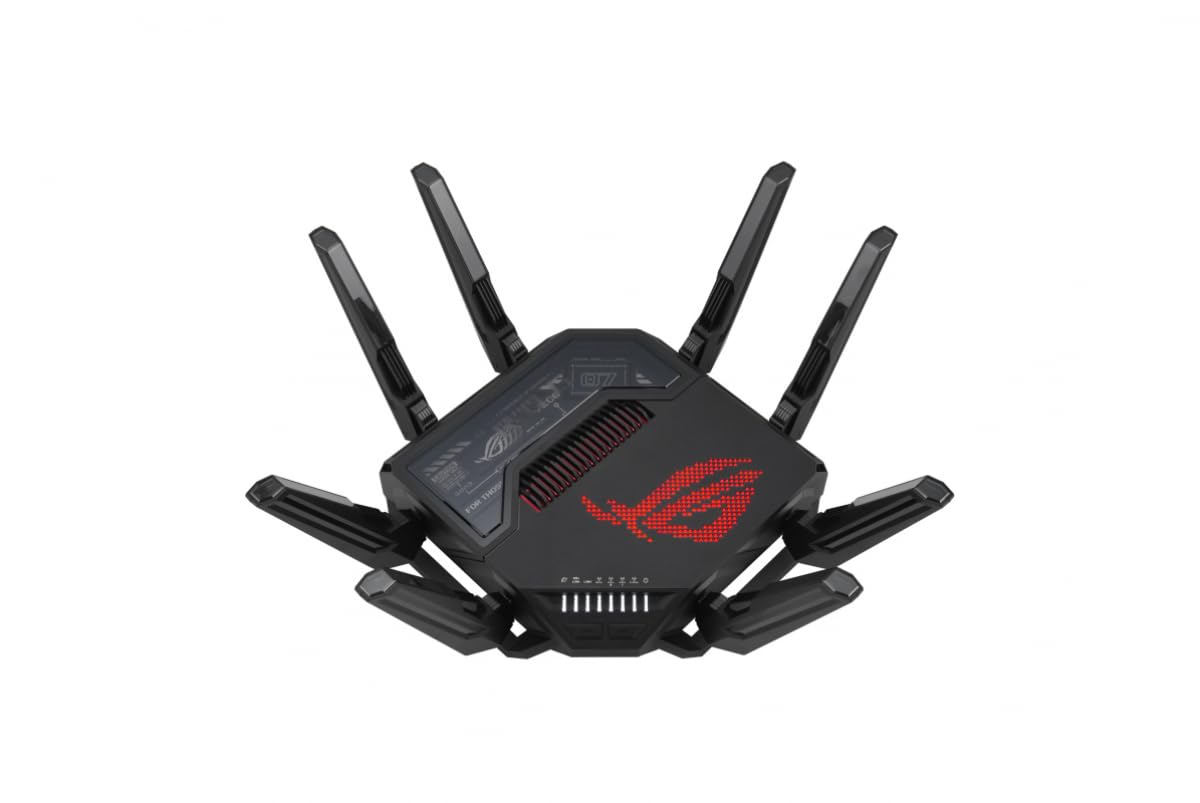
The GT-BE98 Pro is one of the most advanced consumer routers currently available. Designed for demanding users, it provides extensive coverage, high throughput, and advanced network management tools.
 Learn More
- Standard: Wi-Fi 7
- Ports: 10 Gigabit Connectivity
- Display: Integrated LED Screen
- Best For: High-Speed Home Networks
The Archer BE800 combines premium networking performance with a distinctive design. It offers excellent multi-device performance and is particularly attractive for users upgrading to multi-gigabit internet plans.
 Learn More
- Standard: Wi-Fi 7
- Coverage: Large Home Deployment
- Connectivity: Multi-Gig Support
- Best For: Streaming and Smart Homes
Netgear's RS700S focuses on delivering stable high-speed connectivity across large living spaces. It is particularly well suited for households with multiple users streaming, gaming, and working simultaneously.
 Learn More
Should You Upgrade Now?
Users with Wi-Fi 6 systems may not feel an immediate need to upgrade. However, anyone purchasing new networking equipment today should seriously consider Wi-Fi 7 hardware to ensure long-term compatibility with future devices.
As smartphones, laptops, smart TVs, and gaming devices increasingly support Wi-Fi 7, the benefits of the new standard will become much more noticeable. For households investing in technology over the next several years, Wi-Fi 7 represents one of the most significant networking advancements in recent memory.